RSREHAB
RS PROTECTHIP

Dislocation of the hip joint in children with cerebral palsy is caused by excessive stiffness of the surrounding muscles, which causes the femur to dislocate posteriorly and laterally. The age at which dislocation occurs varies widely, and it can occur even at a young age of 2 to 3 years. It is known that the frequency of dislocation increases particularly when standing or walking is delayed or when the child spends a lot of time lying down. Cerebral palsy is a complex syndrome clinically defined, not by a pathological mechanism, and thus, the reported frequency of subluxation and dislocation varies widely depending on the authors (ranging from 3 to 59%, with reports up to 60-80% in severe cerebral palsy), making it one of the most common musculoskeletal complications in children with cerebral palsy, following foot deformities. Subluxation and complete dislocation often require surgical correction of the musculoskeletal system, and even after surgery, ongoing physical therapy is necessary. In children with GMFCS IV cerebral palsy, the risk of dislocation is approximately 3.9% per year, while in those with GMFCS V, it is 9.5%, so a dislocation test using X-rays is recommended every 6 months as a major clinical guideline.
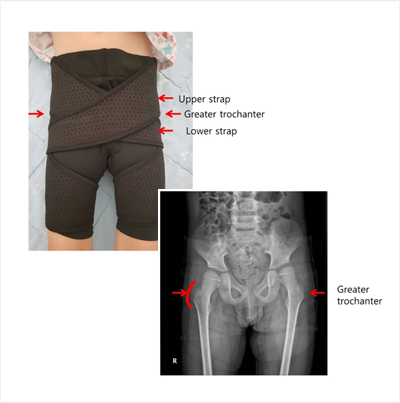
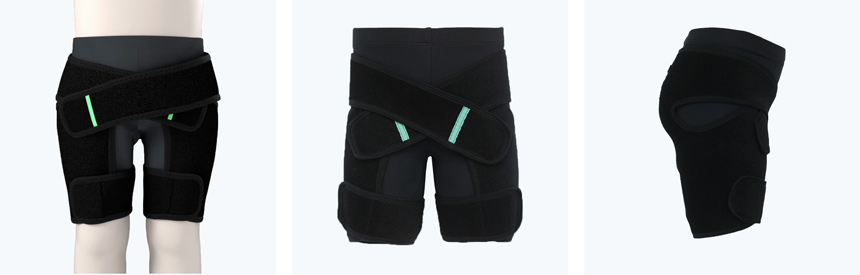
Hip joint problems can cause problems such as pain, walking ability, sitting posture, perineal care, and pressure sores. In particular, in cases where walking is possible, it can have a negative impact on the child's future walking ability, which is an important aspect of quality of life. Therefore, research on therapeutic measures to reduce the risk of hip dislocation in children with cerebral palsy is needed, but there is currently no confirmed conservative treatment to prevent hip dislocation in these children. To address this issue, research has been conducted to develop assistive devices for preventing hip dislocation, and a prototype of such a device has been created, which is currently undergoing clinical trials. It is believed that this medical device can prevent hip dislocation in children with cerebral palsy, reduce complications, improve quality of life, and reduce medical costs.
Related studies were published in Archives of Physical Medicine and Rehabilitation and American Journal of Physical Medicine and Rehabilitation in 2019, demonstrating their scientific excellence.

Business Registration No.: 672-81-01593 ㅣ CEO: Ryu, Ju Seok ㅣ Address: #201 A-dong Seongnam Global Convergence Center, 46, Dallaenae-ro, Sujeong-gu, Seongnam-si, Gyeonggi-do, 13449 Rep. of KOREA
Copyright ⓒ 2019 RS REHAB. ALl Rights Reserved.
